The debate regarding tire plug vs tire screw represents a fundamental choice between temporary, on-the-road emergency solutions and semi-permanent repair methods. While both aim to seal a puncture, they operate through different mechanical principles that impact long-term tire integrity.
Many drivers are confused by these options because market terminology often conflates "plugging" with "screwing," leading to misunderstandings about safety and durability. Choosing the wrong method for your specific puncture can lead to rapid air loss or structural tire damage.
This guide analyzes both methods to help you decide which approach fits your situation, keeping in mind the critical nature of road safety. By the end, you will understand the trade-offs regarding material, installation requirements, and longevity.
- Methodology: How each option interacts with the tire carcass.
- Longevity: Expected lifespan of the seal versus manufacturer standards.
- Skill Level: Tools required for DIY installation.
- Safety profile: The risks associated with improper hole sealing.
- Cost-effectiveness: Analyzing immediate savings against long-term maintenance.
Overview & Head-to-Head Summary

Defining the Tire Plug
A tire plug is an adhesive-coated rubber strip inserted through the puncture using a specialized tool. It is designed to fill the hole and vulcanize slightly to the rubber, preventing air leakage from the inside out.
Defining the Tire Screw (Patch-Screw)
A tire screw is a specialized hardened rubber or metal-core fastener designed to be threaded into a puncture. It mimics a bolt but is constructed from materials intended to compress the hole walls and prevent further propagation of the tear.
| Feature | Tire Plug | Tire Screw |
|---|---|---|
| Installation | Manual reamer + needle tool | Screwdriver/Socket |
| Material | Butyl rubber composite | Hardened rubber/steel core |
| Durability | High (short-term) | Moderate (temporary) |
| Cost | Low | Low |
Before beginning any DIY work on your wheels, consider reading Normal Wheel vs Alloy Wheel: Which Upgrade Suits You? to ensure your rims are compatible with standard repair procedures.
Key Differences & Core Features

Mechanical Anchoring Principles
Tire plugs rely on friction and the tight fit of a fibrous rubber strip. The process involves reaming the hole, which cleans the edges but also risks damaging the tire's internal steel belts if done incorrectly.
Material and Stress Resistance
Tire screws offer a different approach by threading into the puncture. This is often less invasive than reaming, but it lacks the chemical bond that a professional patch provides, making it purely a compression-based seal.
| Metric | Plug | Screw |
| Reaming Needed | Yes | No |
| Puncture Size | Small/Medium | Very Small |
| Chemical Bond | Potential | None |
For those interested in general wheel maintenance, check out Best Bearing Grease Wheel Products: 2026 Comparison Guide to keep your hardware in peak condition.
Performance & Real-World Analysis

Assessing Road Reliability
Real-world testing suggests that performance is highly dependent on the location of the puncture. A sidewall puncture is unsafe for either method, whereas tread-area punctures respond differently to each technique based on the tire's ply density.
Step-by-Step Evaluation Process
Performance remains optimal only when the repair is limited to the center 75% of the tire tread surface.
Best Use Cases & Ideal Scenarios

When Option A (Tire Plug) Makes More Sense
The tire plug is the industry standard for emergency roadside kits. It is best used for standard nail punctures in the tread where you need a reliable, proven method to get to a professional shop.
When Option B (Tire Screw) Makes More Sense
Tire screws are often preferred for smaller, pin-prick style punctures where reaming might cause further damage to the structural integrity of the tire belt.
When It Genuinely Doesn't Matter
In both cases, if the tire has been driven on while flat (run-flat damage), neither method will restore the tire's safety. Structural integrity is lost regardless of the seal method used.
Recommended Equipment & Solution

82PCS Tire Repair Screws, Heavy Duty Tire
A reliable pick for 82PCS Tire Repair Screws, Heavy, selected based on this article's guidance.
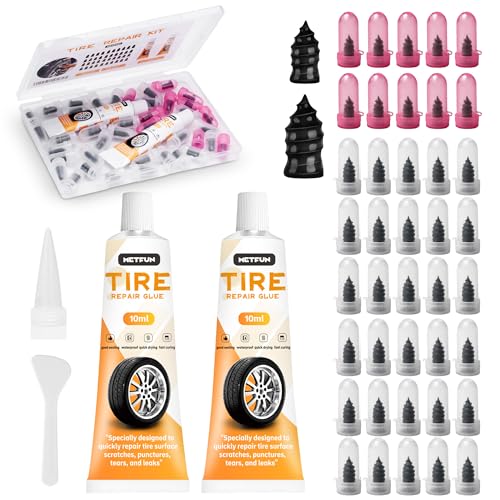
MetFun 40 PCS Quick Fix Screw-in Tire
A reliable pick for MetFun 40 PCS Quick Fix, selected based on this article's guidance.
Final Verdict & Decision Framework
Quick Decision Checklist
To choose effectively, ask: Is this a temporary emergency fix (use a plug) or a minor pinhole in a non-critical area (consider a screw)? Always prioritize a professional internal patch if available.
Decision Mapping Table
| Reader Priority | Recommended Path |
| Roadside Emergency | Tire Plug |
| Very Small Puncture | Tire Screw |
| Long-term Safety | Professional Shop Service |
Frequently Asked Questions
Can I use a plug on a sidewall?
A: No, sidewall repairs are never recommended as they compromise the tire's structural integrity and pose a severe blow-out risk.
Are tire screws permanent?
A: They are intended to be a temporary solution for reaching a repair facility rather than a permanent tire fix.
Does a plug damage my tire belts?
A: Proper reaming is designed to minimize damage, but excessive or incorrect reaming can definitely impact the steel belts inside.
Is a professional patch better than a plug?
A: Yes, a professional internal patch provides a vulcanized, permanent bond that is far superior to any DIY method.
Do I need to take the tire off for a screw?
A: No, that is the primary advantage of a screw, as it can often be applied externally without removing the wheel.
Can I drive at highway speeds after a plug?
A: It is not advised to drive at high speeds on any emergency repair until a professional has inspected the tire.
Which method is cheaper?
A: Both methods are comparable in price, as the cost lies mainly in the convenience of the kit rather than the material itself.
How do I know if the repair is failing?
A: Loss of air pressure or visible vibration while driving are immediate indicators that the repair is not holding.
Key Takeaways
- 1 Both plug and screw methods should be viewed as temporary fixes.
- 2 Never attempt to repair a sidewall puncture under any circumstances.
- 3 Tire plugs require reaming, which carries a risk of internal damage.
- 4 Tire screws offer a non-invasive compression seal for small holes.
- 5 Always monitor tire pressure closely following any DIY repair.
- 6 Professional internal patches are the only recommended long-term solution.
- 7 Your safety depends on getting a permanent inspection at a tire shop.
Conclusion
The choice between a tire plug and a tire screw is essentially a choice between two temporary emergency tactics. Neither should replace a professional inspection and permanent vulcanized patch, which restores the tire to its full safety rating.
By evaluating the size of the puncture and the proximity to the tire sidewall, you can select the most appropriate temporary measure to reach a service center safely. For more information on maintaining your wheels, see How to paint alloy wheels black: A Professional DIY Guide for a Sleek Finish.
Prioritize your vehicle's structural safety over the convenience of a DIY fix whenever possible.