Learning How to Read Wheel Size Markings: Decode Numbers & Letters Like a Pro Sizing & Specs Checklist is an essential skill for any vehicle owner looking to maintain safety and performance.
This guide is designed for car enthusiasts and DIY mechanics who want to move beyond guessing tire sizes. We assume a beginner to intermediate skill level, focusing on the standardized ISO metric system used across the automotive industry.
By the end of this guide, you will be able to confidently interpret the alphanumeric sequences found on your tires and rims, ensuring you select compatible components every time.
- Understanding the tire width and aspect ratio.
- Decoding construction type and rim diameter.
- Identifying load index and speed ratings.
- Recognizing date codes and safety markings.
- Matching wheel specs to manufacturer requirements.
Overview & Prerequisites

What You'll Need
To follow this guide effectively, you will need a clean cloth to wipe down your tire sidewall and a flashlight to illuminate the recessed characters. In some cases, a depth gauge or a digital tire pressure monitor can be useful.
Who This Guide Is For
This guide is tailored for drivers who want to perform their own tire maintenance or seek to upgrade their wheels without compromising handling. Check out Step-by-Step: How to Setup, Configure & Master How to Read Wheel Size Markings: Decode Numbers & Letters Like a Pro for more technical setup details.
Always prioritize your vehicle's door jamb placard over the markings on an existing tire, as the previous owner may have installed incorrect sizes.
Core Concepts & Fundamentals

The Alphanumeric Breakdown
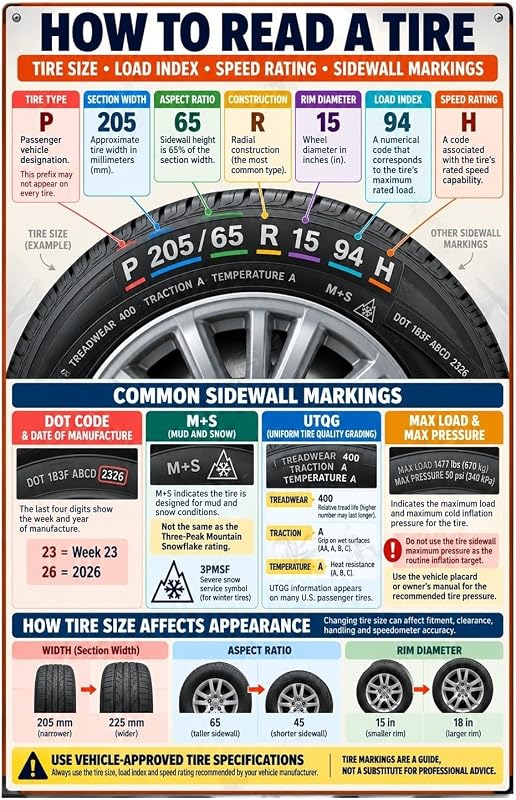
Tire markings typically follow a format like 225/50R17 94V. The first number represents width in millimeters, followed by the aspect ratio (the profile height as a percentage of width), the construction (R for radial), and the diameter in inches.
Load Index and Speed Ratings
The final digits signify the load index (how much weight the tire supports) and the speed rating (the maximum sustained speed the tire can handle). Understanding these prevents catastrophic tire failure. For more context on performance, review Best Tire Speed Ratings: Reliable Performance and Safety Advice.
| Feature | Correct Mental Model | Incorrect Mental Model |
|---|---|---|
| Width | Measured in mm | Measured in inches |
| Aspect Ratio | Percentage of width | Absolute measurement |
| Load Index | Rated weight capacity | Simple numeric ranking |
Step-by-Step Execution Guide
Preparation Phase
Park on a level surface with the parking brake engaged. Clean the sidewall thoroughly to ensure the markings are legible and not obscured by road grime or brake dust.
Decoding Phase
Best Practices & Pro Tips

Matching Tires to Rims
Always verify the "J" rating or rim width if you are planning to change tire widths. A tire that is too wide for a rim can lead to dangerous "bulging" and instability during cornering.
Seasonal Considerations
Pro tip: Check your tire markings before switching to winter tires. Winter compounds may have different speed ratings compared to summer tires, which can impact your vehicle's performance characteristics.
Troubleshooting & Common Pitfalls

Faded or Missing Markings
If markings are worn away, use a white tire paint pen to highlight the characters. If the code is completely illegible, consult the VIN-based database provided by your vehicle manufacturer or a local tire professional.
Resolving Mismatches
If you discover that your tires do not match the manufacturer's placard, do not panic. Simply determine if the variation is within acceptable safety tolerances or if you need to replace them immediately. For further reading, see 7 Common Problems with How to Read Wheel Size Markings: Decode Numbers & Letters Like a Pro (and Quick Fixes).
Frequently Asked Questions
What does the 'P' stand for on my tire?
A: The 'P' stands for Passenger, indicating the tire is designed for passenger vehicles like cars, minivans, and small SUVs.
Why is my rim diameter measurement different from the tire?
A: The rim diameter marking on the tire must match the wheel diameter exactly, otherwise, the tire will not mount.
Can I use tires with a higher speed rating?
A: Yes, generally you can use a higher speed rating, but never install tires with a lower speed rating than what the manufacturer suggests.
How often should I check my tire size markings?
A: You should check them whenever you are purchasing new tires or if you suspect your current tires do not match your vehicle.
What does the 'R' mean?
A: The 'R' stands for Radial, which refers to the internal construction of the tire where fabric cords are laid perpendicular to the tread.
Does the load index impact safety?
A: Yes, an incorrect load index can lead to tire failure under heavy loads, which is a major safety concern.
Is the date code part of the size marking?
A: No, the date code is a separate four-digit code, usually following the DOT sequence, indicating the week and year of manufacture.
Can I change my rim size?
A: You can change your rim size, but you must recalculate the tire aspect ratio to ensure the total outer diameter of the tire remains the same.
Key Takeaways
- 1 Always verify tire specs using the vehicle's door placard.
- 2 The first three numbers in the code represent tire width in millimeters.
- 3 The number after the slash indicates the tire's aspect ratio.
- 4 Never use tires with a lower load index than the manufacturer's recommendation.
- 5 Radial (R) construction is standard for most modern passenger vehicles.
- 6 Clean the sidewall properly to ensure you read the characters accurately.
- 7 Keep the tire diameter consistent when upgrading your wheels.
Conclusion
Mastering the ability to interpret tire and wheel markings empowers you to make informed decisions about your vehicle's safety and performance. By following the systematic approach outlined in this guide, you can avoid common pitfalls and ensure that your vehicle remains in optimal condition.
Remember that consistent maintenance and periodic inspection are key to longevity. For more on tire longevity, read How Long Do Tires Last? Expert Tips to Extend Your Tread Life.
With these skills, you are now ready to approach tire shops and automotive upgrades with the confidence of an expert.
📌 Pillar Resource: Read our complete our How to Read Wheel Size Markings: Decode Numbers & Letters Like a Pro resource for in-depth insights.