Are your wheels stained with brake dust and iron flecks, but you worry harsh acids will damage the finish? Many wheel cleaners are effective but too aggressive for alloy, chrome, or clear-coated rims. That leaves car owners hunting for products that actually clean without the risk.
This guide reviews the best acid-free alloy wheel cleaners available. You’ll see options for color-changing sprays, thick gels, and heavy-duty formulas that are safe on common finishes. Use this list to quickly find a reliable, safe cleaner for your wheels.
| Product Image | Product Name | Best For | Check Price |
|---|---|---|---|
 | P&S Brake Buster Non-Acid Cleaner | Brake Dust Removal | Check Price |
 | Sonax Full Effect Color-Changing Cleaner | Color-Changing Cleaner | Check Price |
 | P&S Brake Buster Pint Non-Acid | Quick Touch-Ups | Check Price |
 | MAD Heavy Duty Wheel Cleaner | Heavy Duty Cleaning | Check Price |
 | KochChemie Magic Wheel Cleaner (Acid-Free) | Iron Particle Removal | Check Price |
 | Meguiar's Non-Acid Wheel & Tire Cleaner | Tire & Wheel Care | Check Price |
 | Car Gods Color-Changing Alloy Cleaner | Color-Changing Alloy Care | Check Price |
 | Carfidant Rim Reactor Gel Cleaner | Safe On Finishes | Check Price |
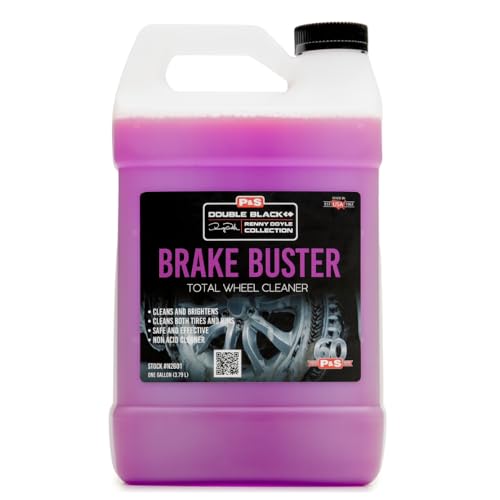
P&S Brake Buster Non-Acid Cleaner
Perfect for car owners and detailers who want a powerful, acid-free wheel cleaner that safely removes brake dust from alloy and clear-coated wheels.
P&S Brake Buster's non-acid formula targets and loosens baked-on brake dust without the harshness of acidic cleaners. The foaming action clings to wheel surfaces, breaking down contaminants so a quick wipe or light brushing and rinse will reveal cleaner alloys — for example, it lifted commuter-car brake dust after a short dwell time with minimal scrubbing.
Beyond cleaning power, Brake Buster feels reliable and gentle in regular use. It rinses clean, has a mild scent, and reduces the risk of etching or dulling finishes compared with strong acids. For routine maintenance or weekend detail sessions, it's a solid, user-friendly choice that balances effectiveness with safe chemistry.
Pros:
- Non-acid formula safe on most alloy and clear-coated wheels
- Foaming action breaks down brake dust for easier removal
- Rinses clean with minimal residue or streaking
- Gentle enough for regular maintenance without harsh fumes
Cons:
- May need light agitation on extremely baked-on grime
- Doesn't produce a color-change reaction, so you may not visually see it working
- Not as aggressive as acid cleaners for industrial-level buildup
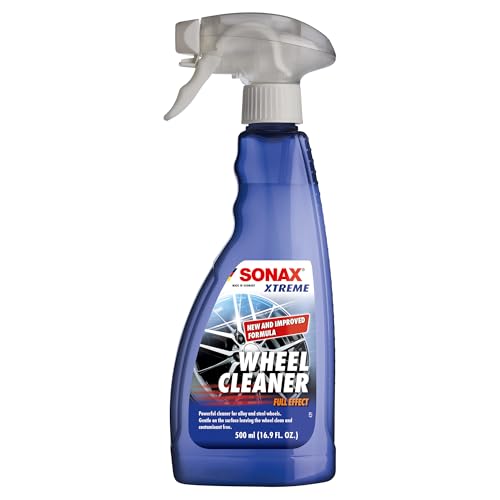
Sonax Full Effect Color-Changing Cleaner
Perfect for car owners who want a safe, acid-free wheel cleaner that gives a clear visual signal when iron contamination is removed.
Sonax Full Effect uses a color-changing formula that turns purple when it reacts with embedded brake dust and iron particles. That makes it easy to see when the product is working—spray on, wait a few minutes until the purple develops, then rinse to reveal cleaner alloy. The acid-free chemistry is gentle on clear-coat finishes and ceramic coatings, so you can clean regularly without risking damage.
The spray bottle has good coverage and clings to vertical surfaces long enough to loosen grime, reducing hard scrubbing. It rinses clean and leaves little residue. For those who want a reliable, user-friendly wheel cleaner that balances safety and visible results, Sonax Full Effect is a strong choice.
Pros:
- Color-changing indicator makes performance obvious and satisfying.
- Acid-free formula is safe on coated and clear-coated wheels.
- Good cling and coverage reduces elbow grease.
- Rinses clean with minimal residue.
Cons:
- Not as aggressive on heavily baked-on deposits; may need light agitation.
- Higher price than basic cleaners, though performance justifies it.
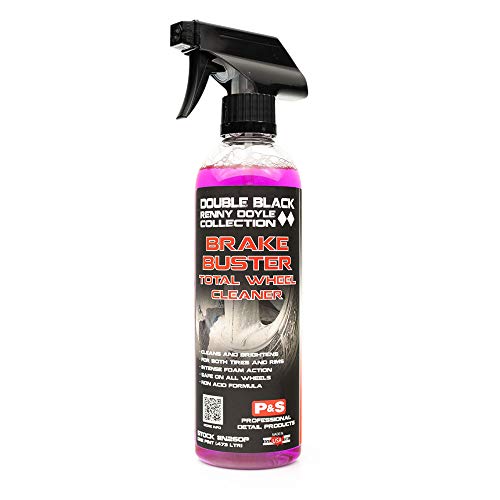
P&S Brake Buster Pint Non-Acid
Perfect for car owners who want a gentle but effective wheel cleaner that won’t eat into alloy finishes.
P&S Brake Buster Pint Non-Acid uses a pH-safe formula to break down brake dust and road grime without harsh acids. That means you can spray, wait a short time, and rinse off stubborn deposits with less scrubbing. For example, it will soften baked-on brake dust so a quick rinse and light brush restores the wheel’s shine.
The bottle is easy to use and the formula is kind to clear coats and coatings. It won’t etch or discolor wheels when used as directed. Overall, it’s a reliable, low-odor option for regular maintenance and spot cleaning, making it a smart pick for anyone who cleans wheels often.
Pros:
- Non-acid formula safe on most alloy and clear-coated wheels
- Effectively loosens brake dust with minimal scrubbing
- Low odor and user-friendly application
- Good for regular maintenance and spot cleaning
Cons:
- May need agitation for very heavy, baked-on grime
- Pint size can be small for frequent use on multiple vehicles
MAD Heavy Duty Wheel Cleaner
Perfect for DIY detailers and car owners who want a powerful but acid-free wheel cleaner that removes heavy brake dust without harming alloy finishes.
The MAD Heavy Duty Wheel Cleaner uses an acid-free, pH-safe formula designed to tackle baked-on brake dust and grime. In practice you spray it on, let it dwell for a few minutes and rinse—often lifting stubborn deposits that normally need hard scrubbing. That gentle-yet-effective action means you can clean faster while protecting clear coats and wheel seals.
Secondary benefits include a clingy foam that stays on vertical surfaces for better dwell time and a concentrated mix that stretches across multiple washes. The packaging is sturdy and easy to use, and the scent is mild. Overall, it’s a strong choice if you want heavy-duty results without acidic risks to modern alloy and coated wheels.
Pros:
- Powerful cleaning while remaining acid-free and pH-safe
- Clinging foam improves contact time for better results
- Safe on coated and clear-coated alloys when used as directed
- Concentrated formula offers good value per bottle
Cons:
- Very heavy contamination may still need light agitation
- Price is slightly higher than basic cleaners
KochChemie Magic Wheel Cleaner (Acid-Free)
Perfect for car owners who want a powerful but gentle wheel cleaner that’s safe on coated, painted, or delicate alloy wheels.
Its key strength is the acid-free, pH-neutral formula that removes brake dust and road grime without etching or dulling finishes. A clinging foam boosts dwell time so you can spray, wait a couple of minutes, then rinse — for example, it lifts brake dust off ceramic-coated wheels without aggressive scrubbing.
Another big plus is efficiency: the concentrate stretches over several uses, so one bottle lasts. The gentle chemistry makes it ideal for regular maintenance rather than occasional heavy-duty stripping, so it’s a solid choice if you want reliable cleaning with minimal risk to wheel coatings.
Pros:
- Acid-free, pH-neutral formula safe on coated and polished alloys
- Effective at removing brake dust and light grime with minimal scrubbing
- Clinging foam improves dwell time for better results
- Concentrated and economical for regular maintenance
Cons:
- Pricier than basic store-brand cleaners
- Not as aggressive on heavily baked-on corrosion as acid-based products
- Heavily soiled wheels may still require brushing or multiple applications
Meguiar's Non-Acid Wheel & Tire Cleaner
Perfect for drivers who want a safe, effective wheel and tire cleaner they can use often without risking their alloy or clear-coated finish.
Meguiar's Non-Acid Wheel & Tire Cleaner uses an acid-free formula that loosens brake dust and road grime while being gentle on painted and clear-coated wheels. In practice you spray, let it dwell briefly, then rinse — for example, it will lift commuter brake dust with minimal scrubbing, saving time and effort.
It rinses clean and leaves little residue, so wheels look refreshed without streaks. The bottle and spray trigger make application simple, and because it's non-acidic you can use it regularly as part of routine maintenance. Overall, it’s a reliable choice for upkeep and safe cleaning.
Pros:
- Acid-free formula that’s safe on most alloy and clear-coated wheels
- Effective at loosening brake dust and everyday grime
- Easy spray-and-rinse application speeds up cleaning
- Gentle enough for regular maintenance without etching
Cons:
- Not as aggressive on heavily baked-on iron contaminants as acid or dedicated iron removers
- May require brushing for very dirty or neglected wheels
- Doesn’t change color to indicate reaction, so results can be less obvious
Car Gods Color-Changing Alloy Cleaner
Perfect for car owners who want an acid-free alloy cleaner that visibly reacts to brake dust while staying safe on clear coats and wheel finishes.
The standout feature is the color-changing formula: spray it on and watch it turn purple as it binds iron particles. That visual cue helps you know it's working. It's also acid-free and pH-safe, so you can use it on painted, powder-coated, and chromed wheels without worrying about etching. For example, spray, wait a few minutes, then rinse or agitate with a brush for cleaner rims.
Beyond the color change and safety, the cleaner rinses easily and leaves minimal residue. The bottle design sprays evenly and the scent is mild. It may act a bit slower than strong acids, but that trade-off preserves finishes. Overall, it's a smart pick if you prefer a gentle, effective, and user-friendly iron remover.
Pros:
- Color-changing action gives clear visual feedback.
- Acid-free formula is safe on most wheel finishes.
- Effective at loosening brake dust without harsh chemicals.
- Easy to rinse and pleasant to use.
Cons:
- Not as fast-acting as aggressive acid cleaners.
- Stubborn grime may still need brushing or repeat applications.
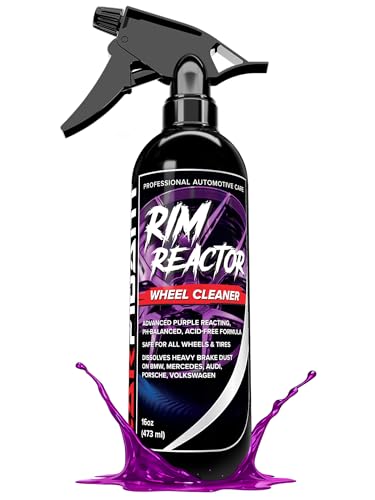
Carfidant Rim Reactor Gel Cleaner
Perfect for car owners and detailers who want a safe, acid-free wheel cleaner that still tackles heavy brake dust and iron contamination.
The Rim Reactor Gel's thick, clingy formula is its standout feature. It sticks to vertical spokes and barrels so the active ingredients can work longer without running off. In practice that means you can spray, wait a few minutes while it loosens baked-on dust, then rinse or agitate with a brush for cleaner rims with less scrubbing.
Another useful aspect is the visual reaction—areas with iron deposits change color as the gel works, so you can see progress. The acid-free chemistry protects clear coats and common wheel finishes, making it a reliable choice for regular maintenance. Overall, it's a strong pick when you want effective cleaning without harsh acids.
Pros:
- Gel formula clings to spokes and barrels for better dwell time
- Acid-free and safe on most clear-coated wheels
- Color-change reaction helps you see where it’s working
- Effectively loosens brake dust with less elbow grease
Cons:
- Needs a few minutes of dwell time and sometimes light agitation
- More expensive than basic spray cleaners
- Can drip if overapplied on steep spokes
Buyer's Guide: Key Factors to Consider
Wheel finish compatibility
Different wheels — clear-coated, painted, polished, chrome, powder-coated or bare aluminum — react differently to cleaners. Choose a product explicitly labeled safe for your finish, and always do a small spot test. For polished or raw aluminum faces, use the gentlest acid-free formulas and shortest dwell time to avoid discoloration.
Cleaning power vs. gentleness (pH & ingredients)
Look for acid-free, pH-neutral or mildly alkaline formulas that use chelating agents and surfactants to break down iron-rich brake dust. Concentrates give better value and allow you to adjust strength for light vs. heavy contamination. Avoid highly alkaline or acidic options if you want broad finish safety.
Application method, tools & aftercare
Decide whether you want a spray, gel, or foam-cannon-friendly concentrate. Pair the cleaner with a soft wheel brush, dedicated wheel mitts, and microfiber drying towels. Rinse thoroughly and consider applying a wheel sealant or maintenance spray after cleaning to make future washings easier and protect finishes longer.
Frequently Asked Questions
Q1: Are acid-free alloy wheel cleaners safe for all wheel finishes?
A1: Most are safe for clear-coated, painted, powder-coated and chrome finishes, but always check the label and perform a spot test on polished or raw aluminum faces before full use.
Q2: Will an acid-free cleaner remove baked-on brake dust?
A2: Many modern acid-free, chelating formulas remove heavy brake dust with proper dwell time and gentle agitation, but extremely baked-on deposits may need repeated treatments or mechanical brushing.
Q3: Can I use acid-free cleaners on ceramic-coated wheels?
A3: Yes — acid-free, pH-neutral cleaners are recommended for ceramic coatings to avoid degrading the coating. Use mild dilution and avoid harsh brushes to preserve the coating.
Q4: How often should I clean my wheels?
A4: For daily-driven cars, every 2–4 weeks is typical; weekly or after every track/session for high-performance or heavily braked cars. Frequent cleaning prevents etching and makes maintenance easier.
Q5: Can I use acid-free cleaners with a foam cannon or pressure washer?
A5: Many concentrated acid-free cleaners are formulated for foam cannons when diluted per instructions. Rinse thoroughly and avoid extremely high pressure right at delicate finishes.
Q6: Are acid-free wheel cleaners environmentally friendly?
A6: A lot of modern acid-free cleaners are biodegradable and phosphate-free, but check labels for certifications and avoid letting runoff enter storm drains.
Final Verdict: Which One Should You Buy?
For most drivers, a concentrated, acid-free cleaner with chelating agents and pH-neutral labeling is the best all-around choice — it safely removes brake dust without harming clear-coats or ceramic layers. Choose a heavy-duty acid-free formula if you deal with severe, track-level contamination, and pick a coating-safe product for ceramic-sealed wheels to preserve protection.