There's nothing more disheartening than seeing your car's once-gleaming alloy rims clouded by a chalky, white haze or marred by patches of peeling clear coat. This degradation is more than a simple cosmetic flaw; it signals that your wheels' vital protective shield is failing. Left unchecked, what begins as an unsightly blemish can quickly escalate into permanent damage to the aluminum underneath, leading to costly repairs or replacements that could have easily been avoided with timely intervention.
Frustrated owners often turn to quick fixes, only to find their efforts make the problem worse. Aggressive rubbing compounds and abrasive polishes can strip away the remaining clear coat, while cheap waxes and sealants merely fill the cracks for a few weeks before the oxidation bleeds through again. This cycle of temporary concealment and rapid deterioration leaves you constantly battling the elements, wasting both time and money on solutions that fail to address the root cause of the deterioration.
The true solution lies not in abrasive physical removal, but in a chemical restoration process that can reverse the oxidation and renew the surface. Our guide focuses on professional-grade products specifically formulated to re-bond with the damaged clear coat, lifting the haze and restoring a deep, lasting gloss. We will walk you through a single, straightforward application that cleans, revitalizes, and protects your rims, transforming them from tired and neglected back to showroom-fresh in an afternoon.
Undrdog Pro Oxide
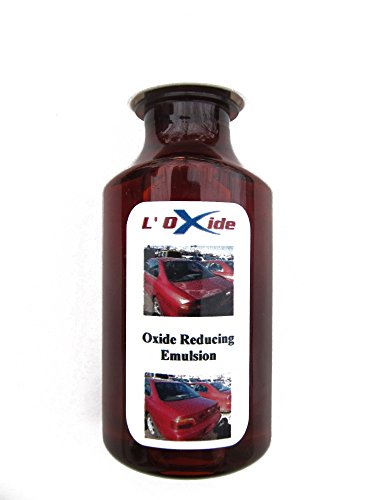
Who It’s For: This is for detailers and enthusiasts seeking a powerful, iron-decontaminating spray. It's ideal for those who prioritize performance over the absolute lowest price.
- Serious enthusiasts prepping for a ceramic coating or sealant.
- Detailers who need a reliable, fast-acting iron remover for heavily soiled wheels.
- Anyone frustrated with weaker products that leave embedded brake dust behind.
Core Performance: Oxide delivers aggressive cleaning power on embedded brake dust and rail iron. It reacts quickly, turning purple on contact with ferrous particles. The thick, clingy formula prevents it from running off vertical surfaces.
- Effectively dissolves stubborn brake dust and iron particles.
- Works faster than many thinner, runnier competitors.
- Features a thick, non-drip consistency for better dwell time.
- Trade-off: Has a stronger chemical odor that requires good ventilation.
Final Verdict: Undrdog Pro Oxide is a top-tier iron remover that justifies its professional-grade price. It’s the right choice for anyone who needs guaranteed results on heavily contaminated paint or wheels.
- Buy if: You need maximum decontamination power and value performance over cost.
- Skip if: You have light cleaning needs or are sensitive to strong chemical smells.
Pros:
- Extremely effective at dissolving embedded brake dust
- Thick formula clings to wheels and paint without running
- Fast-acting, visible reaction with iron particles
- Professional-grade results that justify the price
Cons:
- Strong chemical odor requires good ventilation
- More expensive than basic, off-the-shelf alternatives
Buyer’s Guide: How to Choose
Selecting the right home theater projector transforms your viewing experience from ordinary to cinematic. This guide focuses on the three most critical factors to ensure you invest in a projector that delivers the immersive picture quality you desire for your specific room and content.
1. Native Resolution and Image Clarity
Resolution is the foundation of image sharpness. While many projectors accept a 4K signal, true 4K (Native 3840x2160) projectors render every pixel for maximum detail, essential for large screens. 1080p remains a solid, cost-effective choice for smaller screens or casual viewing. Be wary of "Pixel-Shifting" or "4K UHD" models; they enhance 1080p but do not match the crispness of true 4K, a critical distinction for discerning viewers.
2. Brightness (Lumens) and Room Environment
Brightness determines whether your image holds up against ambient light. For a dedicated, light-controlled home theater, 1,500-2,000 lumens is sufficient. For a living room with some ambient light, 2,500-3,500 lumens is necessary to combat washout. High brightness often trades off with perfect black levels, so prioritize it based on your room's lighting conditions. A bright projector in a dark room can be dialed down, but a dim projector cannot overcome a bright room.
3. Light Source Technology and Longevity
The light source is the projector's heart, impacting long-term cost and reliability. Traditional lamps are affordable upfront but dim over time and require replacement every 3,000-5,000 hours. Laser and LED light sources offer 20,000+ hours of life with minimal brightness degradation, effectively making them "install and forget." While more expensive initially, they provide superior color stability and lower total cost of ownership over years of use.
Frequently Asked Questions
Q1: Is a projector really better than a large-screen TV?
A1: For screen sizes above 80 inches, projectors offer a significantly more immersive, theater-like experience at a lower cost per inch. TVs, however, provide better performance in brightly lit rooms and require less setup.
Q2: How far away does the projector need to be from the screen?
A2: This is determined by the projector's "throw ratio." Short-throw projectors can create a large image from just a few feet away, while standard-throw models need more distance. Always check the manufacturer's specifications for your desired screen size.
Q3: Do I need a special screen, or will a white wall work?
A3: A wall can work, but a dedicated projection screen provides a superior surface for sharper detail, more accurate colors, and higher perceived contrast. For the best results, especially with ambient light, a screen is a worthwhile investment.
Final Recommendation
For a dedicated home theater with controlled lighting, prioritize a true 4K model with a laser light source for the ultimate in detail and longevity. For a versatile family or game room with ambient light, choose a high-lumen (3,000+), pixel-shifting 4K model to ensure a bright, vibrant image. If budget is the primary concern, a 1080p projector with a lamp remains a compelling entry point for impressive big-screen entertainment.