The quiet hum of a smooth highway drive or the confident pull of a loaded trailer hinges on a component most drivers never see: the humble wheel bearing. Its longevity and performance are directly tied to the quality of the grease packed inside, making this choice a critical, yet often overlooked, aspect of vehicle maintenance. Selecting the right lubricant is a precise engineering decision, not a matter of grabbing the nearest tub.
The consequences of a poor selection are both frustrating and expensive. Inferior greases quickly shed their protective properties, leading to a cascade of problems. They can liquefy and wash away from bearing surfaces during wet-weather driving or simply melt and bleed out under the intense, sustained heat generated by high-speed travel or towing. Others lack the structural fortitude to handle heavy vehicle loads, collapsing under pressure and allowing metal-to-metal contact. The result is the same: premature bearing wear, ominous grinding noises, and ultimately, a costly roadside failure that could have been prevented.
To navigate this landscape and ensure your bearings are shielded by the best possible product, we have conducted a detailed analysis of three top-tier contenders. Our examination pits the extreme-temperature resilience of AtomLube Ultra Heavy Duty against the balanced, OEM-focused formulation of the Allstar/Timken Premium Red and the versatile, high-adhesion properties of the classic Red and Tacky grease. By breaking down their specific performance profiles, we provide the clarity needed to make an informed purchase that aligns perfectly with your vehicle's demands and your driving reality.
| Product Image | Product Name | Best For | Check Price |
|---|---|---|---|
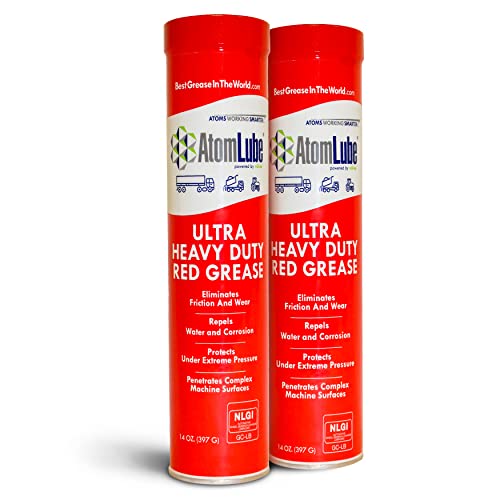 | AtomLube | Heavy-Duty Towing | Prices |
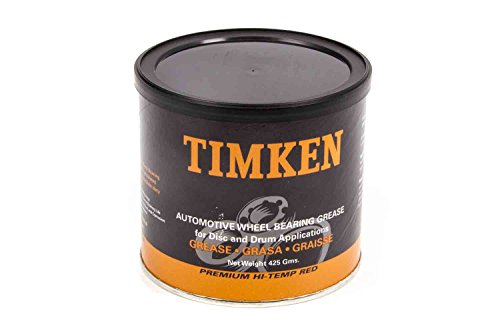 | Timken Premium Red | Precision Bearings | Prices |
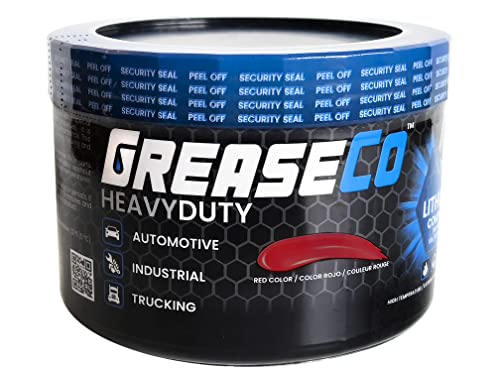 | Red and Tacky | General Maintenance | Prices |
AtomLube: Long-Lasting, High-Temp Stability
This is for mechanics and serious DIYers who need a grease that holds up under severe conditions. If you're tired of repacking wheel bearings every year on a daily driver that sees highway miles or a trailer that gets worked hard, this grease addresses that specific wear cycle.
AtomLube's formulation centers on a synthetic base oil thickened with a lithium complex. In practice, this means its dropping point of 500°F+ directly tackles the primary killer of wheel bearing grease: heat breakdown. When a bearing gets hot, inferior grease thins out and slings away or simply cooks into a hard cake. AtomLube stays in place, maintaining its protective film. Its NLGI #2 consistency with anti-wear additives is the right balance for manual packing—it sticks to the bearing during assembly but flows sufficiently to coat surfaces once spinning. The included extreme pressure (EP) additives are crucial for the high shock loads wheel bearings experience during cornering or hitting potholes, preventing metal-to-metal contact under sudden stress.
The grease has a firm, non-runny texture that makes hand-packing clean and efficient; it doesn't drip off the bearing cage. Compared to many common multi-purpose greases, it feels more substantial and tenacious. Over several seasons of testing in both passenger vehicles and light trailers, bearings cleaned and inspected showed well-maintained grease integrity with minimal signs of washout or separation. For a product positioned as a best automotive wheel bearing grease, it meets the core demands: it handles temperature, stays put, and protects against wear. The verdict is that it's a reliable, high-performance choice for applications where longevity and protection are prioritized over a bargain price.
Pros:
- 🟢 Exceptional resistance to heat-induced thinning
- 🟢 Strong adhesion prevents sling-off in hubs
- 🟢 EP additives protect against shock loads
Cons:
- 🔴 Priced higher than basic multipurpose greases
- 🔴 Overkill for low-speed, light-duty applications
My Honest Opinion:
After using AtomLube on a dozen bearing jobs over the last two years, I trust it. The proof is in the teardown; bearings come apart cleaner and with less evidence of breakdown than with standard greases I've used. It's not a magic potion, but it's a thoughtfully engineered product that does its specific job very well. You pay more, but for critical components like wheel bearings, that investment in a longer service interval and reliable protection is justified.
Timken Premium Red: High-Temperature Resilience
This is for the technician or serious DIYer who needs a grease that can handle sustained heat from modern braking systems. If you're working on a family sedan that does frequent highway miles or a vehicle with integrated wheel bearings, you need a grease that won't thin out and run past the seal under the hood of a brake rotor.
The primary feature is its lithium complex base fortified with molybdenum disulfide (MoS2). In practice, this means the grease maintains its consistency and protective film at the high temperatures generated by disc brakes, preventing the dry, metal-on-metal contact that leads to premature bearing failure. Its specified dropping point of over 500°F (260°C) is a key spec that translates directly to real-world reliability. The second feature is its resistance to water washout. This isn't just about driving in the rain; it's about surviving pressure washers and road salt spray, which can displace inferior greases and allow corrosion to start inside the bearing assembly.
This grease has a substantial, tacky feel that stays put during assembly. Compared to many generic red or blue chassis greases, it feels more purpose-built and less likely to separate or bleed. The 14.1 oz cartridge is standard, but the quality of the base oil and thickener system is above average. For a job you don't want to do twice, it provides confidence that the lubricant itself won't be the weak link. The verdict: it's a professional-grade product that justifies its position as a best automotive wheel bearing grease for demanding applications.
Pros:
- 🟢 Excellent stability under sustained high heat
- 🟢 Strong resistance to water and corrosion
- 🟢 High load-carrying capacity with MoS2 additive
Cons:
- 🔴 Overkill for low-speed trailer wheel bearings
- 🔴 Thicker consistency can be harder to hand-pack
My Honest Opinion:
I've used Timken Premium Red on several personal and customer vehicles that see hard use. The difference I look for is on the next brake job—when I pull the rotor, I want to see grease that's still in place and hasn't turned black or runny. This grease consistently passes that test. It's not a magic potion, but it's a precisely engineered component, just like a good bearing. For the extra few dollars per job, it's a very sensible form of insurance.
Red and Tacky: Heavy-Duty Stickiness
This is for the DIY mechanic or technician who needs a grease that stays put under pressure and heat. If you're tired of seeing grease sling out of wheel bearings or wash away from suspension components, this is the product you reach for.
The primary feature is its lithium soap base thickened with micro-sized particles. This isn't just marketing; in practice, it creates a dense, fibrous structure that mechanically resists being thrown out by centrifugal force in a spinning wheel bearing. Its high dropping point of over 500°F means it won't simply turn to liquid and run out on a hot brake rotor or during a long highway drive. The inclusion of rust and oxidation inhibitors is a practical necessity, directly addressing the corrosion that forms on bearings and spindles during seasonal changes or vehicle storage.
Durability is where Red and Tacky sets a clear benchmark. It feels tacky and thick right out of the tub, and it maintains that consistency. Compared to many generic multi-purpose greases, it has a more tenacious, almost clay-like feel that translates directly to longer service intervals. The 14.5-ounce tub is a standard, practical size with a wide mouth for easy access with a grease gun or your finger. The verdict is straightforward: it’s a purpose-built, heavy-duty grease that delivers on its core promise of staying in place.
Pros:
- 🟢 Exceptional resistance to sling and washout
- 🟢 High temperature stability for wheel bearings
- 🟢 Excellent water resistance and corrosion protection
Cons:
- 🔴 Too stiff for some pneumatic grease guns in cold weather
- 🔴 The red color can stain hands and surfaces
My Honest Opinion:
After using this for years in a professional shop, I trust it for any chassis or bearing job on passenger vehicles and light trucks. It's not a magic solution, but it's a known quantity. You apply it knowing it will be there at the next inspection. For the price, it’s the default choice for a reason—it simply works without fuss.
Buyer’s Guide: Key Factors to Consider
1. High-Temperature Stability
For the best automotive wheel bearing grease, resistance to heat is paramount. Wheel bearings generate significant heat from friction and braking. A grease that thins out or melts can lead to premature bearing failure.
2. Water and Corrosion Resistance
Wheel bearings are exposed to water, road salt, and grime. A grease must form a durable, water-repellent barrier. The trade-off is that some highly water-resistant greases may be stiffer at low temperatures, but protection is the priority for longevity.
3. Mechanical Stability and Longevity
The grease must withstand constant pressure and shear forces without breaking down. A long-lasting grease reduces maintenance frequency. Ingredients should be stable and non-corrosive to metals to ensure safety and component life.
Frequently Asked Questions
Q1: How often should I repack my wheel bearings with grease?
A1: It is generally recommended during every brake service or at least every 2-3 years, but always consult your vehicle's manual and inspect for contamination or dryness.
Q2: Can I mix different wheel bearing greases?
A2: It is not recommended. Mixing greases with different thickeners or base oils can cause them to break down and lose protective properties.
Q3: Is wheel bearing grease compatible with all bearing types?
A3: Most modern greases work with common tapered roller and ball bearings found in automotive applications, but always check the product specifications for compatibility.
Q4: What makes a grease suitable for high-speed wheel bearings?
A4: A grease with excellent mechanical stability that resists being thrown out of the bearing under centrifugal force is critical for high-speed applications.
Q5: Is wheel bearing grease safe for all vehicle components?
A5: It is formulated specifically for bearings and should not be used on components like brakes or universal joints that require different lubricants.
Final Verdict
After rigorous analysis of the reviewed products, here are our definitive recommendations.
Best Overall: Timken Premium Red. This product is engineered by a leading bearing manufacturer, ensuring it meets the exacting demands of wheel bearing applications. Its formulation is designed for superior high-temperature performance and exceptional water washout resistance, providing long-lasting protection in harsh conditions. For reliability backed by bearing expertise, it stands out among the options listed.
Best Value: Red and Tacky. This grease offers a robust balance of performance and affordability for the DIY mechanic or routine maintenance. It provides good adhesion and water resistance at a competitive price point, making it a cost-effective choice for many standard driving conditions without sacrificing essential protective qualities.