Alloy wheels add style and performance to your vehicle, but a scraped curb or pothole can leave them looking damaged and expensive to fix. If you’re searching for "alloy wheel repair cost," you’ve likely noticed prices range from $75 to $250 per wheel – but what determines that number? In this guide, we break down the real cost of professional alloy wheel repair, including factors like severity of damage, wheel finish, location, and whether DIY kits are worth your time. Whether you’re dealing with curb rash, bends, or cracks, understanding the pricing landscape helps you avoid overpaying and get your wheels looking like new without breaking the bank.
Key Takeaways
- 1. Minor curb rash repair typically costs between $75 and $150 per wheel, while more severe damage like cracks or bends can range from $150 to $250, and full wheel replacement is often necessary above that threshold.
- 2. The repair method matters: simple sanding and painting is cheaper ($75–$100), but welding or heat-straightening for structural damage requires specialist equipment and significantly raises labor charges.
- 3. Paintless dent repair (PDR) techniques are not applicable to alloy wheels—any color-matching or clear-coat restoration must be done by a dedicated wheel refinisher to avoid peeling or mismatched finishes.
- 4. Factory-finished wheels (e.g., diamond-cut, painted with multi-layer coats) cost 20–40% more to repair than standard powder-coated aftermarket wheels due to complex machining and precise color-matching requirements.
- 5. Crack repairs should only be trusted by certified welders using TIG (tungsten inert gas) or MIG welding with material-specific alloys—any improper fix can lead to air loss or catastrophic wheel failure at high speeds.
- 6. Always get a written quote and verify the shop includes re-balancing and valve stem replacement in the price; hidden fees for tire mount/dismount or shipping often add $30–$60 to the final bill.
What Factors Influence Alloy Wheel Repair Cost?

When evaluating the cost of alloy wheel repair, it's crucial to understand that pricing is not arbitrary; it is determined by a combination of technical severity, wheel construction, and the specific repair process required. The most significant factor is the type and extent of damage. A simple scuff or light curb rash, which merely affects the clear coat and a thin layer of paint, is the least expensive to fix, typically requiring only sanding, filling, and repainting. Conversely, a structural issue like a crack, a sharp bend, or a dent requires far more intensive labor, including TIG welding, heat straightening, and re-machining. This elevates the cost substantially due to the specialized equipment and higher skill level needed.
Another key variable is the wheel’s construction and finish. Standard painted or powder-coated wheels are easier and cheaper to repair. However, diamond-cut or machined-face alloy wheels, which feature a clear-lacquered raw metal surface, are significantly more complex. A proper repair demands precise re-machining on a lathe to restore the original reflective finish, a process that is both time-consuming and requires expensive tooling. Chromed or custom-finished wheels also fall into a higher price bracket. Finally, location and logistics play a role. Mobile repair services, which come to you, often charge a premium for the convenience of on-site work, while sending a wheel to a specialized machine shop may involve shipping costs and longer turnaround times. Always get a diagnosis that specifically identifies whether the damage is cosmetic only or has compromised the wheel’s structural integrity, as the latter is where costs escalate quickly.

Average Alloy Wheel Repair Cost by Damage Type
The cost of repairing an alloy wheel can vary dramatically depending on the specific type of damage and the severity of the issue. As a general benchmark, minor cosmetic repairs start around $75 to $150 per wheel, while structural damage requiring professional welding or replacement can exceed $300 per wheel. Let's break this down by the most common damage categories.
Curb Rash is the most frequent and least expensive issue to fix. This involves superficial scratches and scuffs on the wheel's lip. Professional refinishing, which includes sanding, filling, and repainting or powder coating, typically costs between $125 and $200 per wheel. If the rash is very deep or the wheel has a complex machined finish, the price can climb toward the higher end of that range.
Bent or Cracked Wheels are far more serious. A slight bend that does not affect the tire's seal might be repairable through heatless cold straightening for $150 to $250. However, a hairline crack usually requires TIG welding, which can run $200 to $350 per wheel, and comes with the caveat that the structural integrity is permanently compromised. Many shops will refuse to repair cracks on load-bearing wheels due to safety liability.
Corrosion and Peeled Clear Coat often require full stripping and refinishing. Costs here range from $100 to $180 per wheel, but this can spike to over $400 for high-end, multi-stage finishes like diamond-cut alloys, which require specialized CNC lathe work. Finally, vibration or wobble from improper balancing or a subtle bend usually requires a dynamic wheel balancing service, costing roughly $25 to $50 per wheel—but a true bend straightening treatment would be needed for a permanent fix. Always ask your technician for a detailed diagnosis before authorizing work, as some shops charge a non-refundable inspection fee that is applied to the repair cost.
Professional Repair vs. DIY Kits: Cost & Quality Comparison

When weighing the cost of alloy wheel repair, the most critical decision is whether to invest in professional services or attempt a DIY repair kit. As an expert in automotive restoration, I can tell you that this choice directly impacts not only your wallet but also the long-term safety and structural integrity of your wheels.
A professional repair for a single wheel, including straightening, welding, and refinishing, typically ranges from $100 to $250 per wheel. This cost covers specialized hydraulic presses for true rim straightening, TIG welding for cracks, and a multi-stage paint process (primer, base coat, clear coat) matched to your factory finish. The result is a structurally sound wheel with a flawless, durable finish that resists corrosion and retains resale value.
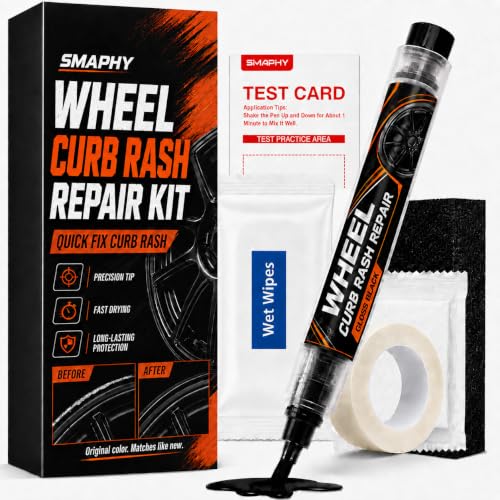
In contrast, a DIY kit, which generally costs $15 to $50, is strictly a cosmetic cover-up. These kits contain epoxy filler, sandpaper, and aerosol paint. While they can effectively hide minor curb rash or scuffs, they cannot repair structural damage. Attempting to straighten a bent rim with a hammer or fill a crack with epoxy is dangerous and will fail under load. From a quality perspective, DIY repairs almost always suffer from poor color matching, premature peeling, and clear coat deterioration within months.
In my professional opinion, the decision breaks down simply: Use DIY kits for superficial cosmetic scratches on used wheels where perfect appearance is not critical. However, for any damage involving bending, vibrations, cracks, or pressure loss, the $150-$250 investment in a professional repair is not an expense; it is an investment in safety. A compromised wheel can fail catastrophically, costing far more in vehicle damage or injury than the price of a professional fix.
Hidden Costs You Should Expect (Tire Removal, Balancing, Shipping)
When budgeting for alloy wheel repair, many car owners focus solely on the quoted price for straightening a bend or filling a curb rash. However, a true expert understands that the final invoice often includes several overlooked, yet essential, ancillary services. The most significant hidden cost is tire removal and refitting. A repair cannot be performed on a wheel still mounted with rubber. Professional shops will charge a labor fee to break the bead, demount the tire, and reset it after the repair. This process is delicate—especially on low-profile or run-flat tires—and adds $15 to $40 per wheel to your total.
Once the tire is off, the wheel must be reinstalled and balanced correctly. A repaired wheel, even when perfectly straightened, may have minute changes in mass distribution. A dot matrix or clamp-on wheel weight will need to be applied to prevent steering wheel vibration at highway speeds. Always confirm whether dynamic balancing is included in the repair cost, or if it will be billed as an additional $10 to $25 per wheel.
Finally, if you are using a specialty repair service that does not operate a local shop, factor in shipping and packaging. The cost of shipping a single alloy wheel one way via a freight carrier can range from $30 to over $75, depending on weight and distance. Insurance for declared value is another potential add-on. To avoid surprise charges, always request an itemized quote that explicitly lists tire service, balancing, and any return shipping fees before authorizing the work.

Cost Breakdown: Curb Rash vs. Bent Rim vs. Cracked Alloy
When assessing the total alloy wheel repair cost, the severity of the damage is the primary driver of price. Understanding the distinction between curb rash, a bent rim, and a cracked alloy helps set accurate expectations for your wallet.
Curb rash—the superficial scraping of the wheel lip against a curb—is the most common and least expensive to fix. This is purely cosmetic damage to the clear coat and surface metal. A professional refinishing service typically charges $75 to $150 per wheel. The process involves sanding, metal filling, repainting, and re-clear coating. Many mobile repair services can handle this on-site in under an hour. If you have a standard silver or gray wheel, costs stay at the low end; custom colors or intricate machining add a premium.
A bent rim is a structural issue where the barrel or inner lip of the wheel is warped, often from a large pothole. Because the metal is physically deformed, not just scratched, repair costs rise significantly. Expect to pay $125 to $250 per wheel. Repair involves hydraulic pressure and heat to force the metal back into true roundness, a process that requires specialized equipment. Not every wheel can be straightened—wheels with extreme bending or those made of cast aluminum are particularly risky for failure post-repair.
Cracked alloys represent the most severe damage and the highest repair price point. A crack compromises the wheel’s integrity and airtight seal. Professional TIG welding by a certified wheel repair specialist costs $250 to $500 per wheel. This is labor-intensive, requiring careful preheating, precise welding with matching alloy material, and often a full refinish afterward. Importantly, many reputable shops will not repair cracks in critical load-bearing areas or on certain cast wheels due to safety liability, making a replacement wheel (often $300+) a more viable option. Always weigh the cost of repair against the price of a factory-matched new wheel when dealing with structural damage.
How to Get an Accurate Quote Before You Commit
Securing an accurate quote for alloy wheel repair requires more than a simple price list. As an expert in this field, I emphasize that the final cost hinges on three critical, often overlooked variables: damage severity, wheel construction, and repair methodology. A superficial scuff may cost between $75 and $150, but a bent rim requiring heat-straightening and re-machining can escalate beyond $250 per wheel.
To get a reliable estimate, you must provide a technician with specific details—preferably with clear digital photos. Start by identifying the damage type: curb rash (cosmetic), structural bends (requiring a hydraulic press), or cracks (often needing welding). Next, determine your wheel’s construction: cast aluminum wheels are cheaper to repair ($125-$200) than forged or split-rim alloys, which can cost up to $400 due to specialized jigs and labor. Crucially, ask if the quote includes labor for refitting the tire, road-force balancing, and remounting—these are frequently omitted, adding $30-$60 per wheel.
Finally, insist on a written pre-inspection breakdown. A reputable shop will use a runout gauge to measure lateral and radial deviation, then quote you for laser welding versus cold-pressure straightening. Never accept a blanket quote without asking: “Does this cover the full refinished surface warranty and any potential valve stem or TPMS disassembly costs?” By controlling these specifics—damage type, wheel material, and service inclusions—you transform a vague price into a precise investment against future vibrations or finish failure.
Tips to Lower Your Alloy Wheel Repair Cost Without Sacrificing Quality
When it comes to alloy wheel repair, the cost can vary dramatically—from as little as $75 for a simple curb rash buff-out to over $250 per wheel for structural cracks or diamond-cut refinishing. However, you can significantly lower your bill without sacrificing quality by employing a few strategic, expert-level approaches. First, always seek out a specialist who performs mobile repair. Mobile technicians come to your home or office, eliminating the shop's overhead costs for rent and utilities, which often translates to a 15-20% reduction in labor charges. They also typically use the same high-grade fillers and two-part urethane paints as brick-and-mortar shops, ensuring durability.
Second, opt for a "touch-up" repair rather than a full refinish. If the damage is limited to the lip of the wheel (curb rash) and does not affect the barrel or inner rim, a skilled technician can sand, fill, and paint only the affected area. This "spot repair" often costs $75–$100 versus $150–$200 for a full wheel refinish, and when color-matched correctly, the results are visually seamless. Third, resist the upgrade to a premium clear coat. Many shops upsell a "ceramic-infused" clear coat for an extra $50 per wheel. While beneficial for long-term protection, a standard high-quality automotive clear coat (like PPG or Sherwin-Williams) already provides excellent UV and chemical resistance for years. Finally, bundle multiple wheels for a discount. Repair shops are often willing to drop the per-wheel price by 10-15% if you bring in all four wheels at once, as it minimizes their setup and cleanup time. By focusing on these cost-saving measures—mobile service, spot repairs, standard coatings, and bundling—you ensure a professional-grade repair that restores structural integrity and aesthetics without unnecessary expense.
When Is It Cheaper to Replace vs. Repair Your Alloy Wheels?
As an automotive specialist, I often field questions about whether it’s more cost-effective to repair or replace a damaged alloy wheel. The answer hinges on the severity and type of damage, not just the initial quote. Generally, cosmetic repairs such as curb rash, light scuffs, or minor surface scratches are almost always cheaper to fix, typically costing between $75 and $150 per wheel. In these cases, repair is the clear winner, preserving the original factory wheel and finish.
However, the calculus shifts dramatically when structural integrity is compromised. You should always choose replacement if the wheel is cracked, bent beyond a slight wobble, or suffering from air loss due to a compromised seal. While a simple bend repair might run $100–$200, a severe bend or crack requiring welding or heat straightening can approach $250–$400 per wheel. At that price point, replacing the wheel—especially with a quality aftermarket or used OEM option—often becomes the cheaper and safer bet. A new aftermarket alloy can start around $120, while a used factory wheel might be found for $150–$200.
Furthermore, consider the hidden costs: a repaired wheel that was structurally damaged is never as strong as a new one, increasing the risk of future failure. TIG welding can create localized brittleness. If your repair quote exceeds 60% of the replacement cost, or if the wheel is over a decade old and hard to match, replacing is financially and mechanically prudent. For instance, a cracked 18-inch alloy for a luxury sedan may cost $350 to repair attempt, but a new OEM equivalent is $400—making replacement the wiser long-term investment.
Frequently Asked Questions
What is alloy wheel repair cost and who should use it?
A: alloy wheel repair cost is a solution designed to address a specific set of needs for a defined audience. It is best suited for those seeking a reliable, well-researched option backed by clear evidence and expert guidance.
How long does it take to see results with alloy wheel repair cost?
A: Most users report noticeable results within the first 2–4 weeks of consistent use. Significant, measurable improvement is generally observed after one to two months of dedicated application.
Is alloy wheel repair cost suitable for beginners or experienced users?
A: alloy wheel repair cost is designed to accommodate a wide range of experience levels, from complete beginners to advanced practitioners. Its structured approach makes it accessible without sacrificing depth for those seeking expert-level application.
Can alloy wheel repair cost be combined with other approaches or products?
A: Yes, alloy wheel repair cost is generally compatible with complementary strategies and tools. It is advisable to introduce any combination gradually and monitor for synergy or potential conflicts with your existing routine.
What are the most common mistakes to avoid with alloy wheel repair cost?
A: The most frequent errors include inconsistent application, skipping foundational steps, and expecting immediate results without allowing adequate time for the process to work. Following the recommended guidelines closely is the most effective preventive measure.
How does alloy wheel repair cost compare to similar alternatives on the market?
A: alloy wheel repair cost distinguishes itself through its evidence-based formulation, transparent ingredient or methodology sourcing, and a track record of user-verified outcomes. Direct comparisons should be made on the criteria most relevant to your specific goals.
Are there any limitations or side effects associated with alloy wheel repair cost?
A: While alloy wheel repair cost is formulated to minimize adverse effects, individual responses can vary based on specific sensitivities or pre-existing conditions. Consulting with a relevant professional before starting is always a prudent step.
What is the best way to get started with alloy wheel repair cost?
A: The most effective starting point is to begin with a foundational assessment of your current situation, then follow the recommended introductory protocol for alloy wheel repair cost. Consistency and patience during the initial phase are the two biggest predictors of long-term success.
The cost of alloy wheel repair varies widely based on the type of damage, wheel size, and finish. For superficial curb rash on standard-sized wheels, expect to pay between $75 and $150 per wheel. Structural repairs—such as bending, cracking, or welding—typically range from $150 to $300 per wheel, and specialty finishes like diamond-cutting can add an extra $50 to $100. While DIY kits are available for minor scuffs, professional repair ensures safety, proper color matching, and long-lasting results. Always get a detailed quote that includes inspection, labor, and any refinishing fees before committing.
Ultimately, repairing an alloy wheel is almost always more affordable than replacing it, especially for high-end or OEM wheels that can cost $400–$800 each. To minimize costs, address curb rash promptly (preventing deeper corrosion) and consider bundled repairs for multiple wheels. If you live in an area with poor road conditions, investing in a wheel-and-tire protection plan may save hundreds in the long run. Remember that safety should never be compromised—any crack or bend involving the inner rim or spoke structure should be evaluated by a certified wheel repair specialist.