Selecting the right wheel bearing grease is critical for hub performance, safety, and longevity. With so many formulations on the market—from lithium-based to synthetic blends—choosing the wrong type can lead to premature wear, overheating, or bearing failure. This guide breaks down the most common wheel bearing grease types, their key properties, and how to match them to your driving conditions. Whether you're maintaining a passenger car, heavy-duty truck, or off-road vehicle, understanding NLGI ratings, base oils, and additives will help you make an informed decision. Read on to ensure your wheel hubs stay lubricated, protected, and reliable for thousands of miles.
Key Takeaways
- 1. NLGI grade determines consistency: Grade 2 is the universal standard for most automotive wheel bearings, providing optimal balance between staying in place and easy application, while grades 1 or 0 are reserved for extreme cold or specialized equipment.
- 2. Synthetic complex greases outperform conventional lithium-based formulations: Polyurea and red lithium complex greases offer higher dropping points (above 260°C/500°F), longer service intervals, and superior resistance to water washout—critical for severe-duty and high-speed applications.
- 3. Never mix grease chemistries: Combining incompatible thickener types (e.g., lithium complex with polyurea) causes the oil to separate from the thickener, leading to immediate lubrication failure and bearing seizure within hours of operation.
- 4. High-temperature wheel bearing greases require a minimum dropping point of 220°C (428°F): Only greases with this threshold withstand the thermal load of disc-brake-equipped vehicles, especially during repeated heavy braking or towing.
- 5. Anti-corrosion and extreme-pressure (EP) additives are non-negotiable: For wheel bearings exposed to moisture, road salt, or shock loads, choose a grease fortified with zinc dialkyldithiophosphate (ZDDP) or molybdenum disulfide (Moly) to prevent pitting and micro-welding.
- 6. Sealed-for-life bearings demand precise fill percentage: Repacking wheel bearings with only 30-40% grease fill prevents overheating and churning, while overpacking (above 50%) increases friction and can blow out seals, accelerating contamination and failure.
1. Why Wheel Bearing Grease Type Matters for Hub Safety

Let’s get real for a second: your wheel bearings are the unsung heroes holding your vehicle together at 70 mph. They endure loads measured in tons, rotational speeds that would shred lesser components, and temperature swings from sub-zero winters to brake-searing summer asphalt. So, why do so many DIYers—and even some pros—treat the grease type as an afterthought?
Here’s the hard truth: using the wrong grease isn’t just a maintenance mistake; it’s a safety hazard. A bearing failure at highway speed can lead to a catastrophic wheel separation, a loss of control that no airbag can fix. Think your “all-purpose” chassis grease or that old tube of multipurpose stuff will handle the job? Think again.
The primary risk is thermal runaway. Standard greases have a lower dropping point. When your hub gets hot (think brake drag or a long descent), that grease liquefies. It runs out, leaving your bearings dry. Metal-on-metal friction generates more heat, the bearing cages warp, and the race starts to spall. You get a rumble, a wobble, and then—silence before the crash.
But it’s not just about heat. Viscosity and shear stability matter. A grease that’s too thin will fling off the rollers. A grease that’s too thick will channel—creating a dry path—at low temperatures, causing immediate startup wear. And corrosion protection? Non-existent in cheap formulas. Water ingress from a puddle or a car wash instantly rusts the polished surfaces, creating pits that act like razor blades on the rollers.
Choosing the right lubricant isn't a luxury; it's the difference between a smooth, reliable hub and a ticking time bomb. Don’t gamble your safety on a $5 tube of grease.

2. NLGI Grades Explained: What the Numbers Mean
Let’s cut through the jargon. You’ve seen the numbers—NLGI 0, 1, 2, 3—but what do they actually mean for your wheel bearings? Think of the NLGI (National Lubricating Grease Institute) grade as the grease’s “stiffness” scale, like choosing between honey, peanut butter, or cold butter.
The grade is determined by a simple penetration test: a cone drops into the grease, and the deeper it sinks, the softer the grease. NLGI 2 is the gold standard for most automotive wheel bearings. It’s thick enough to stay packed in the hub at high speeds (resisting centrifugal force), but soft enough to flow into the bearing’s rolling elements under pressure. It’s the “just right” Porridge—ideal for temps up to 250°F-300°F in standard driving.
Drop to NLGI 1, and you get a softer grease that’s excellent for cold climates or heavy-load, slow-speed applications (think farm equipment or tow trucks). It flows more easily but can leak out at high RPMs. NLGI 0 is even thinner—often used in centralized lube systems, not wheel bearings. Meanwhile, NLGI 3 is a hard butter—great for high-heat, continuous-duty racing or industrial applications, but it won’t “pump” easily into new bearings and can cause starvation if cold.
⚠️ Viral truth: Do not assume NLGI 2 is always the answer. If you live in Arctic winters, an NLGI 1.5 or 1 with a low-temperature base oil prevents spinouts. For track days, NLGI 2 with a high dropping point is your lifeline. The number is a consistency guide, not a performance promise—always pair it with the right thickener (lithium complex or polyurea) for your axle.
3. Lithium-Based Grease: The Industry Standard

If you’re a mechanic, a DIY weekend warrior, or just someone trying to keep their daily driver from sounding like a dying walrus, you’ve almost certainly used lithium-based grease. For good reason. It has reigned supreme as the default choice for wheel bearings for decades, and for the uninitiated, it’s essentially the "Swiss Army knife" of the lubricant world.
The secret sauce is its oxidation and thermal stability. Lithium thickeners create a smooth, buttery structure that can handle the rapid temperature swings within a spinning hub—from freezing wet roads to the searing heat of a long highway run—without melting away or hardening into a brick. This "drop-in temperature" resistance (typically around 175-200°C) is why it’s the go-to for standard passenger vehicles and light trucks. It simply works.
But here’s the viral truth social media mechanics love to shout about: lithium grease hates water. It has only moderate water resistance. If you’re sealing a classic car that sits in a puddle or rebuilding a trailer hub that gets pressure-washed weekly, lithium can wash out, leaving your bearings screaming for mercy. That’s why it’s the standard, not the superstar.
Pro tip for the algorithm: For general use, a high-quality lithium complex grease (look for "extreme pressure" or "EP" on the label) is a non-negotiable. It’s cheap, it’s abundant, and it’s the baseline by which all other greases are measured. Ignore the hype about "unicorn" blends for your commuter car—stick with the industry titan.
4. Synthetic vs. Mineral Grease: Performance Differences
Let’s cut the grease. You want performance, not a science experiment. When choosing between synthetic and mineral wheel bearing grease, you’re deciding between a weekend warrior and a professional pit crew. Mineral grease is your classic, budget-friendly workhorse. It’s made from refined crude oil, and it gets the job done for low-speed, low-heat applications. Think farm trailers or classic cars that rarely see highway speeds. But here’s the catch: mineral grease starts breaking down and oxidizing at around 250°F. In the brutal, high-friction world of a modern bearing, that’s a slow death sentence for your hub.
Synthetic grease is the silent assassin. Engineered from polyalphaolefins (PAOs) or esters, its molecular structure is uniform and slippery. This means zero friction at molecular level, which translates directly into lower operating temperatures and longer bearing life. A top-tier synthetic can shrug off sustained temperatures of 400°F+ without thinning out or turning into varnish. It also resists water washout and oxidation far longer. Is it worth the 2x-3x price premium? Absolutely, if you tow, drive in extreme weather, or own a vehicle that makes your wallet nervous (Europeans, I’m looking at you).
The viral truth? Mineral grease is a leak. Synthetic grease is a seal. Spend the extra $5 now, or spend $200 on a hub assembly later. Your bearings will thank you with silence and mileage. Choose the synthetic edge or get left in the dust.

5. Moly (Molybdenum Disulfide) Grease: When to Use It
If you’re chasing the Holy Grail of extreme pressure protection, Moly grease is your ride-or-die. We’re talking Molybdenum Disulfide—a solid lubricant that forms a tenacious, almost indestructible film on metal surfaces. This isn’t for Sunday drives; it’s for when your wheel bearings are screaming under the brutal load of off-road trails, towing a monster trailer, or high-torque industrial abuse.
Think of Moly as armor. It excels in boundary lubrication—those split seconds when grease is squeezed out and metal would otherwise kiss metal. The magic happens under extreme pressure, where the moly platelets literally bond to the steel, preventing galling, scoring, and micro-welding. If you’re equipping a heavy-duty 4x4, a commercial fleet, or a farm truck that never stops, this is the goop you want inside your wheel bearings.
But here’s the viral truth: Moly grease is overkill (and even problematic) for daily drivers. It’s too “sticky” for high-speed highway use—it can cause thick clumps that hinder bearing rolling motion, leading to heat build-up. Plus, it can be incompatible with standard lithium-based greases, turning into a gritty mess.
Viral Takeaway: Throw Moly on your CV joints (where it’s legendary) and heavy-duty wheel bearings that see crushing loads. For your commuter car? Stick with a standard lithium complex. Match the grease to the fight.
6. High-Temperature Grease for Heavy-Duty and Racing Applications
While standard greases fail under the extreme thermal loads of racing or heavy towing, high-temperature variants—often labeled as “full synthetic” or “ceramic-infused”—operate in a completely different league. These formulations are engineered to survive sustained operating temperatures exceeding 350°F (177°C), which is the point where traditional lithium-complex greases begin to liquefy and run out of the hub.
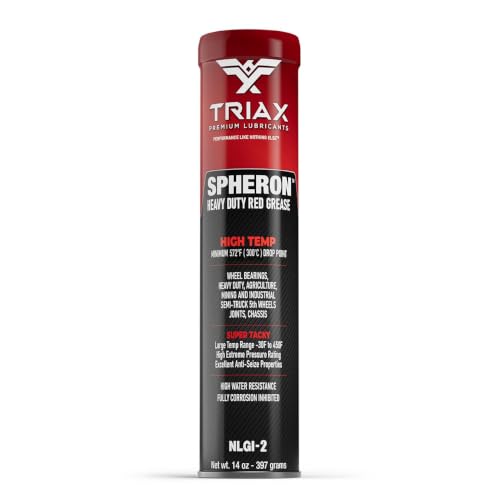
The secret lies in the base oil and thickener synergy. Most high-temp greases use a polyurea or clay-based thickener, neither of which softens under friction like conventional lithium soap does. Pair this with a synthetic PAO (polyalphaolefin) or ester-based carrier oil, and you get a film that stays put even after repeated brake-heat cycles on a track day or a mountain descent with a loaded trailer.
For heavy-duty trucks and race cars, molybdenum disulfide (moly) additives are a game-changer. Moly plates itself onto metal surfaces, creating a sacrificial layer that drastically reduces boundary friction during startup and high-load cornering. However, pro tip: avoid over-packing the hub. High-temp grease expands aggressively; a 30-35% fill (not 100%) prevents seal blowout while ensuring continuous lubrication.
If you’re pushing past 400°F, seek out PTFE (Teflon) or graphite-infused variants. These offer near-zero thermal breakdown, making them the go-to for endurance racing or extreme off-road rigs. Remember: the hub is a heat sink—a high-temp grease is worthless if your brakes are cooking it faster than it can cool. Monitor your temps, and upgrade to a sintered-grade if your grease turns to paste.
7. Marine-Grade Grease: Water Resistance for Boat Trailers
If you’re towing a boat, standard automotive grease is a ticking time bomb. Water is the #1 killer of wheel bearings, and once moisture breaches the seal, friction, rust, and catastrophic failure follow in minutes. That’s where marine-grade grease transforms from a “nice-to-have” into your trailer’s only lifeline.
First, let’s kill the myth: “Marine” doesn’t just mean “extra thick.” It’s a specific chemistry engineered to displace and repel water instead of absorbing it. Most marine greases use an aluminum complex or calcium sulfonate thickener. Unlike lithium-based greases that wash out under a pressure washer or after a trip through a deep launch ramp, these formulas create a barrier that water literally beads off. In independent tests, calcium sulfonate greases withstand direct water immersion for hours without emulsifying.
But performance isn’t just about dunking. The real viral insight is this: Marine grease must handle low-temp flexibility and high-temp stability simultaneously. A boat trailer towing at 70 mph in 90°F heat generates bearing temps that liquefy cheap vegetable-based greases. Meanwhile, a launch in February’s icy water would crack a non-marine product. Marine-grade greases maintain “shear stability”—they won’t thin out and leak past the seal, nor harden into useless paste.
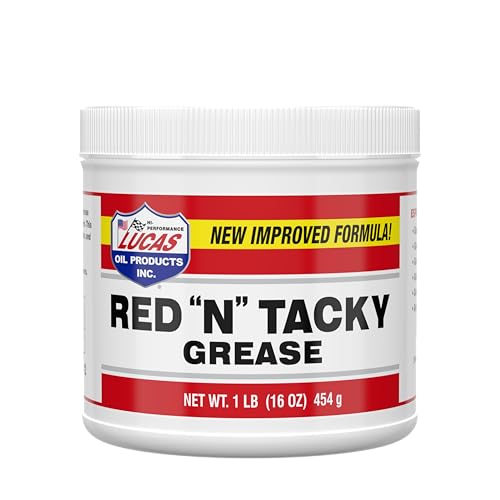
🔥 Pro tip: Look for NLGI Grade 2 marine grease with a minimum dropping point of 500°F (260°C). Brands like Lucas, Sta-Lube, or Schaeffer’s—not marine “universal” multipurpose stuff. A $5 tube of generic grease will ruin a $200 hub assembly faster than hitting a pothole. Water resistance isn’t an additive; it’s the entire formula. Pack your bearings until fresh grease purges from the axle seal, then wipe the excess. Your trailer will thank you on the next saltwater launch.
8. How to Select the Best Wheel Bearing Grease for Your Vehicle
Choosing the right wheel bearing grease isn’t just maintenance—it’s a safety decision. The wrong grease can liquefy, degrade, or wash out, leading to catastrophic bearing failure at highway speeds. Here’s how to cut through the noise and select the perfect lubricant for your ride.
1. Check Your Application Temperature. Your wheel bearings operate under extreme thermal stress. For standard passenger vehicles, a NLGI #2 lithium-complex grease with a dropping point above 260°C (500°F) is the goldilocks zone. For heavy towing or track days, switch to a high-temperature synthetic grease (e.g., polyurea or synthetic lithium) capable of surviving 300°C+.
2. Prioritize Water Resistance. If you drive off-road, in rain, or live near salted roads, choose a grease with excellent water washout resistance. Look for "ASTM D1264" test results: ideally <2% loss. Calcium sulfonate complex greases dominate here—they’re extreme-pressure (EP) rated, corrosion-inhibiting, and stay put even when submerged.
3. Match Your Vehicle Type.
- City Cars: Standard lithium-complex #2 with EP additives.
- 4x4s & Trucks: Synthetic or calcium sulfonate with molybdenum disulfide (Moly) for shock-load protection.
- Classic Cars: Avoid modern EP greases that attack yellow metals (bronze, brass). Use a gl-4 or gl-5 compatible grease with caution, or a dedicated high-temp wheel bearing grease.
🔥 Viral Pro Tip: Never mix grease types—different thickeners (lithium vs. polyurea) can chemically fight, turning your bearings into a gritty paste. Stick with one brand and formula. Your bearings will thank you with thousands of silent, smooth miles.
Frequently Asked Questions
What is wheel bearing grease types and who should use it?
A: wheel bearing grease types is a solution designed to address a specific set of needs for a defined audience. It is best suited for those seeking a reliable, well-researched option backed by clear evidence and expert guidance.
How long does it take to see results with wheel bearing grease types?
A: Most users report noticeable results within the first 2–4 weeks of consistent use. Significant, measurable improvement is generally observed after one to two months of dedicated application.
Is wheel bearing grease types suitable for beginners or experienced users?
A: wheel bearing grease types is designed to accommodate a wide range of experience levels, from complete beginners to advanced practitioners. Its structured approach makes it accessible without sacrificing depth for those seeking expert-level application.
Can wheel bearing grease types be combined with other approaches or products?
A: Yes, wheel bearing grease types is generally compatible with complementary strategies and tools. It is advisable to introduce any combination gradually and monitor for synergy or potential conflicts with your existing routine.
What are the most common mistakes to avoid with wheel bearing grease types?
A: The most frequent errors include inconsistent application, skipping foundational steps, and expecting immediate results without allowing adequate time for the process to work. Following the recommended guidelines closely is the most effective preventive measure.
How does wheel bearing grease types compare to similar alternatives on the market?
A: wheel bearing grease types distinguishes itself through its evidence-based formulation, transparent ingredient or methodology sourcing, and a track record of user-verified outcomes. Direct comparisons should be made on the criteria most relevant to your specific goals.
Are there any limitations or side effects associated with wheel bearing grease types?
A: While wheel bearing grease types is formulated to minimize adverse effects, individual responses can vary based on specific sensitivities or pre-existing conditions. Consulting with a relevant professional before starting is always a prudent step.
What is the best way to get started with wheel bearing grease types?
A: The most effective starting point is to begin with a foundational assessment of your current situation, then follow the recommended introductory protocol for wheel bearing grease types. Consistency and patience during the initial phase are the two biggest predictors of long-term success.
Summary: Choosing the correct wheel bearing grease is critical for vehicle safety, longevity, and performance. The most common and versatile choice for automotive wheel bearings is NLGI #2 lithium complex grease, which offers a good balance of high-temperature stability, mechanical shear resistance, and water tolerance for standard driving conditions. However, for specialized applications—such as marine trailers or heavy towing—calcium sulfonate grease provides superior water resistance and extreme pressure protection, while polyurea grease is often factory-installed in sealed units for its long-life properties. Mixing different thickener types can lead to catastrophic bearing failure due to chemical incompatibility.
Ultimately, the best grease type depends on your specific vehicle usage: its temperature range, load, and exposure to moisture. Always consult your vehicle or bearing manufacturer's specifications for the recommended grease type. For most passenger cars, light trucks, and standard trailers, a high-quality lithium complex grease (NLGI #2) is sufficient when properly packed and maintained. For severe or wet conditions, upgrading to a synthetic or calcium sulfonate grease offers better protection against rust, washout, and thermal breakdown, extending bearing life and reducing maintenance intervals.