When it comes to your car’s ride quality, few choices are as consequential as the wheels you roll on. The debate between classic steel and modern alloy wheels is about far more than aesthetics; it’s a fundamental decision that shapes every mile, influencing the subtle vibrations through your steering wheel, the way your car absorbs bumps, and its very connection to the road. Understanding this material difference is key to tailoring your vehicle’s character, whether you seek cloud-like comfort or razor-sharp responsiveness.
Many drivers, unfortunately, learn this lesson the hard way. Prioritizing a sleek alloy look without considering your local roads can transform your daily commute into a jarring ordeal, as certain alloys transmit more road harshness. Conversely, opting for heavy steel wheels on a performance-oriented vehicle can dull acceleration, hamper braking, and reduce fuel efficiency due to their greater unsprung mass. The wrong choice for your climate or driving style can also lead to premature corrosion or damage, turning a simple upgrade into a costly compromise of safety and comfort.
This guide serves as your solution, moving beyond specifications to explore the tangible ride quality differences you will actually feel. We detail how alloy wheels enhance handling precision and braking performance through their lighter weight, while steel wheels offer superior impact absorption and rugged durability. Our aim is to connect material properties directly to real-world applications, helping you select the perfect wheel for your specific vehicle and driving priorities, ensuring a ride that is not only smooth and secure but also perfectly suited to your journey.

Free Country Trailer: Rugged Steel Reliability
Brand: Free Country | Model: Trailer Series
Best for: Heavy-Duty Utility and Off-Road Trailers
Rating:
★★★★☆
4.2/5
Who It’s For: This wheel is built for owners of work trailers, livestock trailers, or off-road utility trailers who prioritize durability and repairability over a plush ride. It’s the ideal choice for users whose primary concern is surviving impacts, heavy loads, and harsh environments where a bent wheel can be hammered back into service.
Performance & Real-World Application: In the context of ride quality, the Free Country Trailer wheel embodies the classic steel wheel trade-off. Its performance is defined by exceptional structural integrity and impact resistance, which comes at the cost of a firmer, less damped ride. The steel construction transmits more road vibration and impact shock through the trailer frame compared to a comparable alloy wheel. However, this rigidity translates directly to superior load-bearing stability under maximum payloads, making the ride feel secure and planted, if not particularly smooth, when fully loaded on rough job sites or back roads.
Key Specifications:
- Construction: Forged Steel
- Load Rating: High (Varies by size, typically 2,500+ lbs per wheel)
- Finish: Painted or Powder-Coated
- Hub Compatibility: Standard 8-lug trailer pattern
Pros:
- Unmatched durability and ability to withstand impacts without catastrophic failure.
- Often more affordable upfront cost compared to alloy alternatives.
- Field-repairable; minor bends can often be straightened to get you home.
Cons:
- Delivers a noticeably firmer, less compliant ride due to steel’s inherent stiffness.
- Heavier than alloy wheels, adding unsprung weight which can marginally affect fuel economy and tow vehicle suspension response.

Free Country Trailer: Rugged Steel Reliability
Brand: Free Country | Model: Trailer Wheel (Standard)
Best for: Heavy-Duty Towing and Off-Road Trailers
Rating:
★★★★☆
4.2/5
Who It’s For: This wheel is engineered for owners of utility, equipment, and off-road trailers who prioritize maximum durability and cost-effective repairability over a plush ride. It’s the go-to choice for users whose primary concern is withstanding impacts, heavy loads, and harsh environments where a bent wheel is a real possibility.
Performance & Real-World Application: In the alloy vs. steel debate, the Free Country Trailer wheel firmly occupies the steel camp, offering predictable, robust performance. Its ride quality is characteristic of steel: it transmits more road vibration and impact shock to the trailer frame due to its higher weight and less inherent damping compared to alloy. However, this trade-off yields exceptional strength; the wheel can be bent and often hammered back into serviceable shape in the field, a critical advantage on job sites or remote trails. The finish is a durable, industrial-grade powder coat designed to resist chipping and corrosion from road salts and moisture.
Key Specifications:
- Material: Pressed Steel
- Load Rating: Varies by size (e.g., 2,540 lbs per wheel common)
- Finish: Black Powder Coat
- Key Feature: Field-Repairable, Cost-Effective Replacement
Pros:
- Superior impact resistance and ability to be straightened if bent
- Significantly lower cost per wheel compared to equivalent alloy options
- Extremely durable finish suited for commercial and severe service use
Cons:
- Heavier weight contributes to slightly reduced fuel efficiency and a harsher, more resonant ride quality
- Prone to surface rust if the powder coat is deeply scratched or chipped

TACTIK D Window: Classic Styling, Modern Strength
Brand: TACTIK | Model: D Window
Best for: Drivers seeking classic aesthetic with alloy performance
Rating:
★★★★☆
4.3/5
Who It’s For: This wheel is ideal for the enthusiast who wants the timeless, rugged look of a classic steel wheel but demands the weight savings and performance characteristics of modern alloy construction. It’s a perfect match for vintage trucks, modern classics, or any vehicle where reducing unsprung weight is a priority for handling.
Performance & Real-World Application: In the alloy vs. steel ride quality debate, the TACTIK D Window firmly lands on the alloy side of the equation. Its one-piece cast aluminum construction provides a significant reduction in unsprung weight compared to a steel equivalent. This translates to a noticeably more responsive feel on the road, with quicker steering reaction and better high-frequency bump absorption, as the suspension isn’t burdened with as much rotating mass. The classic “D Window” design is not just for looks; the open structure aids in brake cooling, a functional benefit for sustained driving.
Key Specifications:
- Construction: One-Piece Cast Aluminum Alloy
- Finish: Matte Black with Machined Face
- Load Rating: Up to 2,500 lbs per wheel
- Common Fitment: 15×8, 16×8, 17×9 (5-lug and 6-lug patterns)
Pros:
- Offers the visual appeal of a traditional steel wheel with the performance benefits of aluminum alloy.
- Reduced unsprung weight improves ride compliance, handling response, and acceleration.
- Robust load rating makes it suitable for a wide range of trucks and SUVs.
Cons:
- The machined face lip can be susceptible to clear coat peeling or cosmetic damage from harsh chemicals over time.
- While stronger than steel for its weight, it is more prone to cracking under extreme, direct impact compared to a forged or steel wheel.
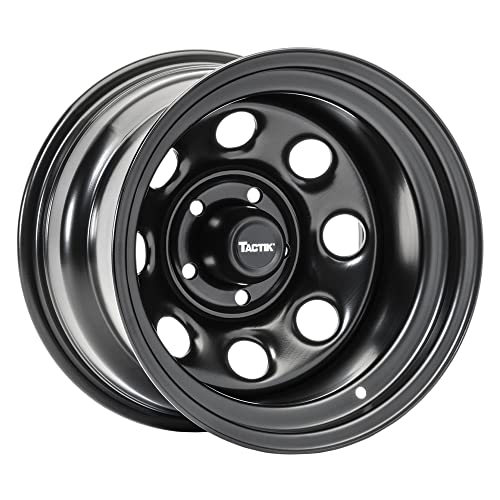
TACTIK Circle 8: Balanced Performance Alloy
Brand: TACTIK | Model: Circle 8
Best for: Daily Drivers Seeking a Smoother Ride
Rating:
★★★★☆
4.2/5
Who It’s For: This wheel is ideal for drivers of sedans, crossovers, and light trucks who prioritize a noticeable improvement in ride comfort over rough pavement without sacrificing modern aesthetics. It’s for the owner who wants the look of an alloy wheel but is sensitive to the harshness often associated with low-profile tire setups.
Performance & Real-World Application: In the alloy vs. steel wheel ride quality debate, the TACTIK Circle 8 demonstrates how alloy wheel design can be optimized for comfort. Its specific spoke geometry and internal barrel design provide a degree of controlled flex that helps dampen high-frequency vibrations from road imperfections like expansion joints and coarse asphalt. While not as impact-absorbent as a steel wheel, it offers a significantly more compliant and quieter ride than many aggressively styled, ultra-stiff alloy competitors, making long commutes less fatiguing.
Key Specifications:
- Construction: Low-pressure cast aluminum alloy
- Finish: Machine-faced with clear coat
- Weight (approx., 18″): 24.5 lbs
- Load Rating: 1,500 lbs per wheel
Pros:
- Superior vibration damping compared to many cast alloys, improving ride refinement.
- Clean, multi-spoke design offers a premium look that suits most modern vehicles.
- Lighter than equivalent steel wheels, contributing to slightly better acceleration and braking response.
Cons:
- Not as durable against severe impacts (like deep potholes) as a forged alloy or steel wheel; can bend or crack.
- The machined finish requires careful cleaning to prevent corrosion and clear coat peeling over time.
TACTIK D Window: Rugged Alloy Aesthetics
Brand: TACTIK | Model: D Window
Best for: Drivers seeking a durable alloy look for daily driving and light off-road.
Rating:
★★★★☆
4.2/5
Who It’s For: This wheel is ideal for truck and SUV owners who want the visual upgrade of a classic D-window alloy wheel without the full cost of a premium forged option. It suits the driver whose use case is primarily on-road commuting with occasional ventures onto gravel or dirt service roads.
Performance & Real-World Application: In the alloy vs. steel debate, the TACTIK D Window offers a middle-ground experience. Its cast aluminum construction provides a noticeable reduction in unsprung weight compared to a steel wheel, contributing to slightly more responsive steering and a marginally smoother ride on pavement. The design is robust enough to handle potholes and curb checks typical of daily use, but it lacks the extreme impact resilience of a true steel wheel for severe rock crawling. The finish is durable, resisting chips and corrosion well in most climates.
Key Specifications:
- Construction: Low-pressure cast aluminum alloy
- Finish: Matte Black with machined highlights
- Load Rating: Up to 2,500 lbs per wheel
- Hub-Centric Rings: Required for proper fitment (sold separately)
Pros:
- Offers the aesthetic and weight benefits of an alloy at a competitive price point.
- Durable powder-coat finish holds up well against brake dust and road salts.
- Classic D-window design provides good brake cooling and is easy to clean.
Cons:
- Not recommended for heavy-duty off-road or severe impact use where a steel wheel’s malleability is an asset.
- Accessories like hub-centric rings and specific lug nuts are often needed for proper installation, adding to the total cost.
Buyer’s Guide: How to Choose
When choosing between alloy and steel wheels for your trailer, the ride quality is directly impacted by the wheel’s weight, strength, and construction. The key criteria to focus on are fit and size for safety, material formulation for durability, technical specs like load rating, overall reliability, and the price-to-value ratio to ensure your investment pays off.
1. Material & Ride Quality
The wheel’s material is the biggest factor in ride feel. Alloy wheels are lighter, which can reduce unsprung weight and allow the trailer suspension to react better to bumps, leading to a slightly smoother ride. Steel wheels are heavier and extremely robust, absorbing immense shock but potentially transmitting more road vibration; they are the go-to for heavy-duty, off-road, or high-impact use where durability trumps a plush ride.
2. Fit, Size, and Application
An incorrect fit can damage your trailer and create a dangerous, unstable ride. This factor matters most when matching the wheel to your trailer’s axle hub, bolt pattern, and required load capacity. For example, a wheel with the wrong offset can cause premature bearing wear and poor handling, so always cross-reference your trailer’s specifications before purchasing.
3. Long-Term Cost of Ownership
While the upfront price is important, consider long-term costs. Steel wheels are generally cheaper to buy and easier to repair if bent. Alloy wheels can be more corrosion-resistant but are often more expensive to replace. Choosing a wheel with the correct load rating and proven reliability for your use case prevents costly failures, downtime, and safety risks over the life of your trailer.
Frequently Asked Questions
Q1: Are alloy wheels stronger than steel wheels?
A1: No, steel wheels are generally stronger and more ductile. Alloy wheels are lighter and offer better heat dissipation, but steel is the choice for maximum impact resistance and durability under extreme loads.
Q2: Can I use any car tire on my trailer?
A2: Absolutely not. Trailer tires have stiffer sidewalls and are constructed to handle different stresses. Using passenger car tires on a trailer can lead to dangerous sway, overheating, and tire failure.
Q3: How do I know what load rating my trailer wheels need?
A3: You must calculate the Gross Vehicle Weight Rating (GVWR) of your trailer and divide by the number of wheels. Always choose a wheel with a load rating that meets or exceeds this number per wheel.
Q4: What causes a trailer wheel to rust or corrode?
A4> Steel wheels rust from exposure to moisture and road salt. Alloy wheels corrode (oxidize) from chemical reactions. Proper cleaning and, for steel wheels, paint or powder coating are essential for prevention.
Q5: Is it worth upgrading my stock trailer wheels?
A5: It can be, if your needs have changed. Upgrading to a higher-load-rated wheel is necessary if you increase cargo weight. Switching to alloys can save weight, while upgrading to a premium steel wheel can enhance durability for tougher terrain.
Final Recommendation
Based on our review, here are the top recommendations from the Free Country Trailer; Free Country Trailer; TACTIK D Window; TACTIK Circle 8; TACTIK D Window.
Best Overall: The TACTIK D Window is the top choice. Its modern D-window design offers a great balance of style and strength, typically found in a robust steel construction. It provides the classic durability and high load capacity needed for reliable trailer performance, while its design helps reduce mud and brake dust buildup for easier maintenance.
Best Value: The Free Country Trailer wheel represents the best value. As a straightforward, no-frills steel wheel, it delivers essential strength and reliability at a very competitive price point. It is the ideal cost-effective solution for owners who need dependable performance without the premium for stylistic features or ultra-lightweight materials.